
Note: This site is moving to KnowledgeJump.com. Please reset your bookmark.
Activities for Learning how to Create Successful Meetings
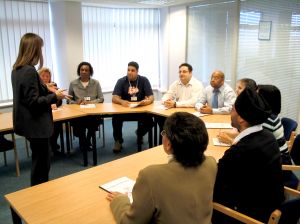
Activity 1 - Roadblocks that Hinder Successful Meetings
Objective - Identify the differences between good and bad meetings.
Time: 25 minutes
Step 1
Each learner takes about 5 minutes to think about meetings that he or she has attended that was not as successful as it should have been. The learners should write down the reasons that blocked the people from doing their best and prevented the meeting from becoming a success.
Step 2
Divided the learners into small groups (3 to 6 people). The learners in each group will use a round-robin method to develop a list of blocks that prevent meetings from being successful by using a Round-Robin method:
- Using the list that they developed in Step 1, each learning takes a turn reading one item (called a block) from their list that prevented a successful meeting.
- Someone in the small group records the block on a paper or flip chart.
- Once everyone in the small group has provided one block, continue the process until all blocks have been recorded (do not record duplicate blocks).
- After all the blocks have been recorded, the learners should study the list to see if it is complete.
Step 3
Rejoin the small groups into one large group and have them select the six most common blocks for general discussion.
Activity 2 -A Model for Successful Meetings
Time: 40 minutes
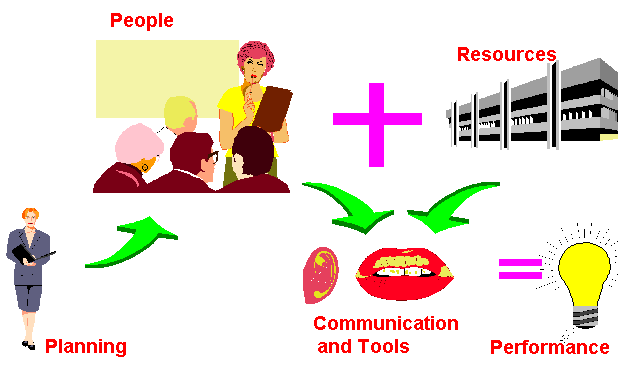
Hand out a copy of the graphic on meetings to each learner:
Step 1
Break the learners into small groups (3 to 6 learners).
Using the graphic as a guide, in addition to the lists they developed in Activity 1, have each group discuss and list what it takes to create a successful meeting.
Step 2
Bring the groups together and have them discuss what it takes to develop a successful meeting. The main points are:
- Planning: Although this is one of the smallest illustrations on the drawing, it is the biggest factor that will determine if the meeting is successful. Poor planning produces poor performance.
- People and resources: Assemble the right people to the meeting and structure the meeting so that they can follow their expected norms and roles. Ensure the required resources are on hand (e.g. meeting room, flip charts, projector).
- Communication: Notice that the mouth is bigger than the ear . . . should it be the other way around — more listening and less talking?
- Performance: This implies there must be a common goal or objective that everyone agrees upon.
Next Steps
These activities are based on the Conducting Meetings chapter
Return to the Leadership Training and Development Outline